Hire Slow, Fire Quick
As a business leader, your time is valuable, and hiring the right people can feel overwhelming. Without a clear, strategic system, recruiting can become inconsistent, rushed, or ineffective. Implementing a structured hiring process ensures you consistently attract top talent, maintain a strong company culture, and eliminate unnecessary bottlenecks.
Over the past ten years, I have refined this system, allowing my team to take ownership of hiring while ensuring we consistently bring in the right people. The only time a hire has not worked out was when I bypassed this system. By empowering my team to lead the process and distributing responsibilities based on capacity, we can recruit when needed rather than only when we have time. This approach fosters team buy-in, improves new hire integration, and streamlines decision-making.
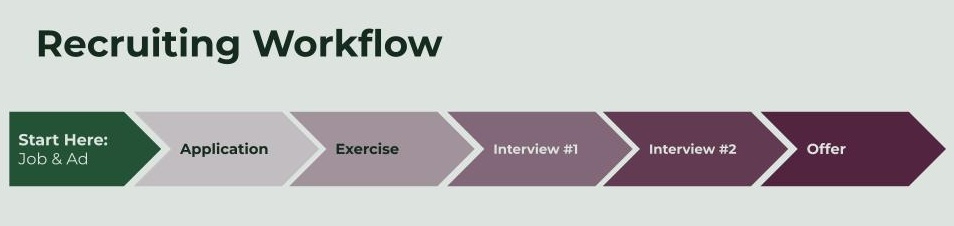
Hiring Workflow
- Job Posting & Ad
- Application
- Exercise
- Interview #1
- Interview #2
- Offer
1. Job Posting & Ad
Every hiring process must start with your company values. These should be evident throughout your recruitment efforts, from choosing job posting channels to crafting job descriptions and ads.
Choosing the Right Recruiting Channels
Finding the best channels to post job listings is crucial to ensuring that your hiring process isn’t overwhelmed with unqualified candidates. A well-targeted recruiting strategy saves time, increases efficiency, and ensures that you attract top-tier talent instead of sifting through a flood of resumes that don’t meet your needs. Consider:
- Job boards (LinkedIn Jobs, ZipRecruiter, etc.)
- Social media and company networks
- Emailing your client list or community
- Physical posters in your business
- Recruiting from universities or specialized schools
It’s essential to track where your best candidates come from. For example, in my marketing firm, LinkedIn ads and social media posts yield the highest-quality applicants, so we focus our efforts there.
Reviewing the Job Description
Before creating the job ad, it is essential to review the job description with the team that the new hire will be joining. This step ensures accuracy in role expectations and helps identify key responsibilities that may need clarification. When the team has input, they are more likely to feel invested in the hiring process and help create a clearer, more compelling job posting.
Once the job description is finalized, crafting the job ad becomes much easier. The ad should focus on what it’s like to work in this role, rather than just listing responsibilities.
Crafting a Strong Job Ad
While the job description outlines responsibilities, the job ad should focus on the experience of working with your company. Here’s an example:
Example Job Ad:
Are you a designer passionate about creating impactful marketing materials? Do you thrive in a supportive and collaborative environment where your work makes a difference? Are you looking for a place to grow professionally while maintaining work-life balance? If this sounds like you, we want to talk!
Must Haves:
- 1 to 5 years of experience
- Agency experience (ad, PR, or marketing)
- Small business experience
- Desire for work/life balance
- Willingness to learn
- Experience with Adobe Suite, Google Business Products, WordPress preferred
Things You Must LOVE:
- Design
- Teamwork
- Organization
- Dogs
2. Application Process
Once your job ad is live, you need a streamlined way to capture and assess applicants. An application is essential to standardizing your hiring process, ensuring that all candidates provide the necessary information to determine their qualifications. Without an application, you risk receiving incomplete or irrelevant submissions, making it harder to filter out unqualified candidates efficiently.
To further streamline this process, consider using an Applicant Tracking System (ATS). An ATS automates the collection and organization of applications, helping your team quickly sort and evaluate candidates. This reduces administrative burden, eliminates redundancy, and ensures that you don’t overlook strong applicants due to manual errors. A well-implemented ATS can also help track where applicants are coming from, giving you insight into which recruiting channels are most effective. We will go into more detail about an ATS in an upcoming blog.
Components of an Application
- Contact information
- Resume and cover letter
- Questions assessing experience and qualifications
- Portfolio or work samples (if applicable)
- References
Setting clear standards for application review helps your team efficiently filter out unqualified candidates. The goal is to eliminate at least half at this stage.
Establishing Application Standards
Before your team begins reviewing applications, it is essential to establish clear evaluation standards. This ensures consistency, speeds up decision-making, and allows your team to confidently determine which candidates should proceed to the next step or be declined. Without defined standards, applications can be assessed too subjectively, leading to inefficiencies in your hiring process.
Examples of Application Standards:
- Education & Experience: Candidates must have a minimum of 3 years of experience in the relevant field and/or a degree in a related discipline.
- Skills & Qualifications: Applicants should demonstrate proficiency in required tools/software (e.g., Adobe Suite, Google Business Products, etc.).
- Cultural Fit: Responses to application questions should align with company values (e.g., teamwork, customer-first mindset, adaptability).
- Attention to Detail: Applications must be complete, well-formatted, and free from typos/errors. Missing requested documents (such as a resume or portfolio) results in automatic disqualification.
- Follow-Through: If an applicant does not follow specific instructions in the application (e.g., submitting work samples in the required format), they should not move forward.
By defining these criteria, your team can quickly and efficiently assess each application, ensuring that only qualified candidates proceed.
Pre-Written Email Responses
Pre-written email responses help standardize communication with applicants, ensuring professionalism and efficiency throughout the hiring process. By automating this step, we have significantly reduced response times, keeping candidates engaged and improving the overall applicant experience. These emails also help set expectations, providing clarity on next steps or politely declining applicants who do not meet the requirements.
Rejection Email:
Subject: Thank You for Your Application
Thank you for applying to [Company Name]. After reviewing your application, we’ve decided to move forward with other candidates. We appreciate your interest and wish you the best in your job search.
Next Step Email:
Subject: Next Steps in Our Hiring Process
Thank you for applying to [Company Name]! We think you could be a great fit for our team. The next step is a job-specific exercise. If you’d like to proceed, reply to this email, and we will send the details. Exercises must be completed within two business days.
3. Exercise Stage
Many businesses skip this step, but it is critical in identifying the best talent. Resumes and applications can only provide so much insight—candidates can claim various skills, but the exercise stage allows you to see them in action. This step helps validate their capabilities, ensuring they can actually perform the tasks required for the role.
The exercise should simulate tasks they will do on the job, giving both the employer and the candidate a preview of what working together would be like. This process also allows you to assess problem-solving abilities, attention to detail, and alignment with company values. Without this stage, you risk hiring someone who looks great on paper but struggles with practical execution. This also gives the candidate a chance to demonstrate their enthusiasm for the role while allowing you to see their skills in action before committing significant time and resources to the interview process. A well-structured exercise ensures that only the most capable and engaged candidates proceed, making the interview stage more effective and efficient.
Examples:
- Designers: Given brand guidelines to create a sample project
- Marketers: Write an ad campaign proposal
- Account managers: Draft email responses to customer inquiries
Applicants who meet the required standard move to interviews. Like the application stage, this should eliminate about half of the candidates.
4. Interview #1: Team-Led Interview
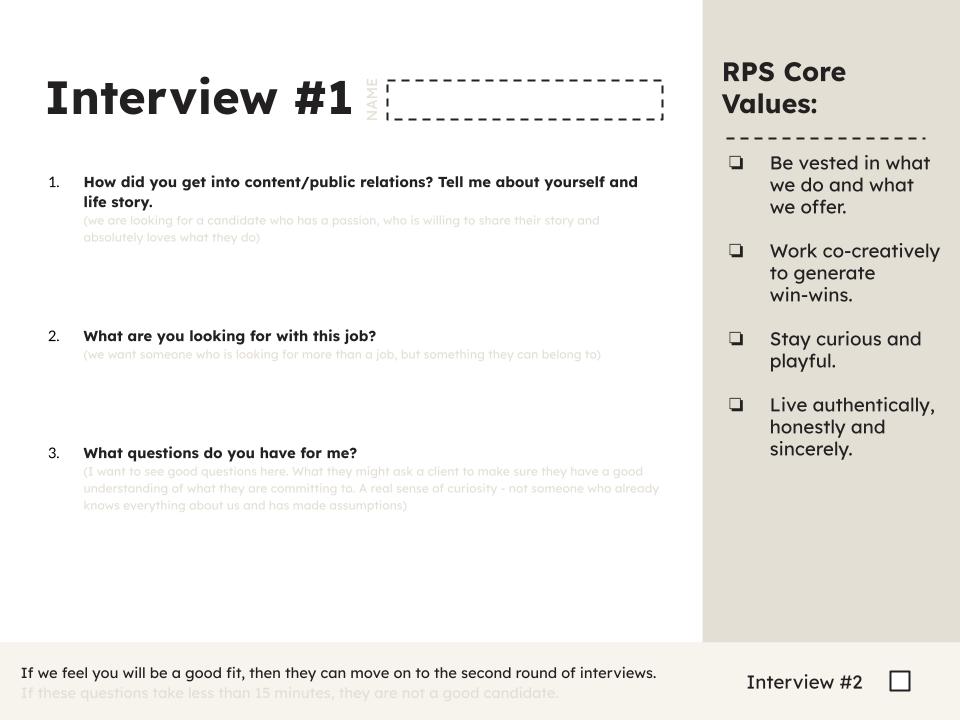
The first interview is conducted by the team and serves as a culture-fit assessment. This should be a 30-minute interview with 3 key questions designed to evaluate:
- Alignment with company values
- Communication skills
- Work style and adaptability
If a candidate finishes the interview too quickly, they may not be a strong fit. If they talk excessively, they may not be concise communicators.
5. Interview #2: Decision-Maker Interview
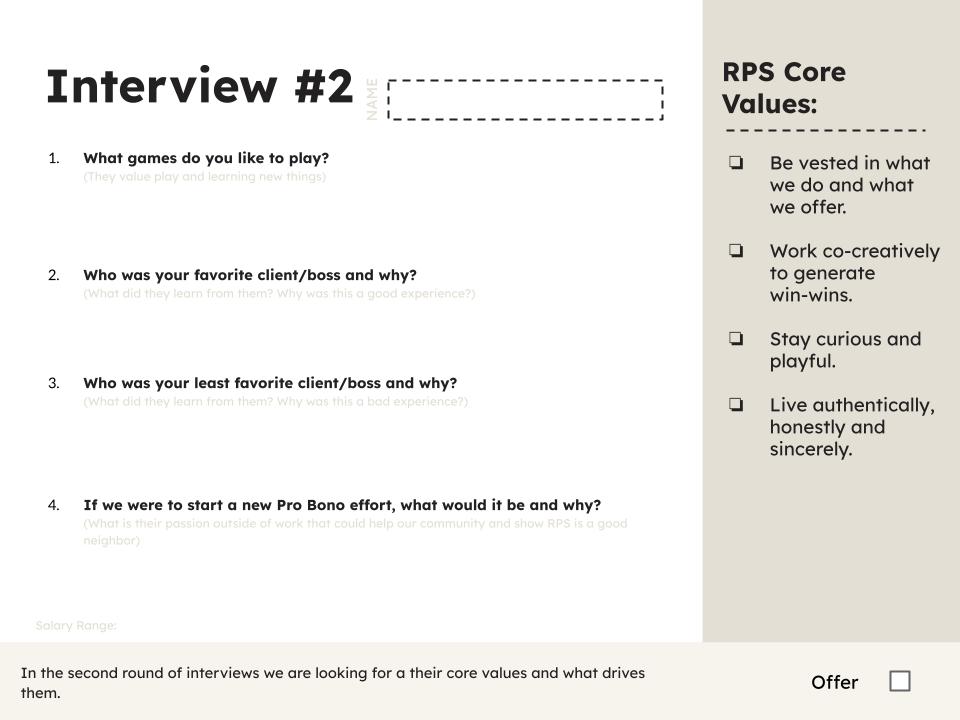
The second interview is conducted by leadership and is more in-depth. This stage should have no more than five candidates. The goal is to identify the best hire by evaluating technical skills, strategic thinking, and alignment with company values.
Here are samples from my marketing business Rock Paper Scissors (RPS):
6. Making the Offer
Once the final candidate is selected, ensure they understand your expectations, company culture, and benefits before making a formal offer. Clarity at this stage prevents future misunderstandings.
Implementing and Refining Your Hiring System
Once this process is mapped, assign responsibilities among team members to eliminate bottlenecks. Train your team to follow this workflow so hiring can happen when needed, not just when convenient.
By following this system, you will:
- Attract high-quality candidates who align with your company culture.
- Streamline the hiring process, reducing time spent on unqualified applicants.
- Ensure candidates can demonstrate their skills before hiring.
- Improve team buy-in by involving them in the hiring process.
- Reduce turnover by making better hiring decisions from the start.
This structured approach ensures that each new addition is a great fit both in skills and culture, ultimately strengthening your team and business.
Next week, we will explore why an Applicant Tracking System (ATS) is a game-changer in the hiring process. We’ll dive into how an ATS can automate workflows, improve candidate tracking, and help you make smarter hiring decisions with less effort. Stay tuned for practical tips on selecting the right ATS for your business.





 Black Creek Business Coaching